Terms of use dolor sit amet consectetur, adipisicing elit.
Recusandae provident ullam aperiam quo ad non corrupti sit
vel quam repellat ipsa quod sed, repellendus adipisci,
ducimus ea modi odio assumenda.
Disclaimers
Lorem ipsum dolor sit amet consectetur adipisicing elit.
Sequi, cum esse possimus officiis amet ea voluptatibus
libero! Dolorum assumenda esse, deserunt ipsum ad iusto!
Praesentium error nobis tenetur at, quis nostrum facere
excepturi architecto totam.
Lorem ipsum dolor sit amet consectetur adipisicing elit.
Inventore, soluta alias eaque modi ipsum sint iusto fugiat
vero velit rerum.
Limitation on Liability
Sequi, cum esse possimus officiis amet ea voluptatibus
libero! Dolorum assumenda esse, deserunt ipsum ad iusto!
Praesentium error nobis tenetur at, quis nostrum facere
excepturi architecto totam.
Lorem ipsum dolor sit amet consectetur adipisicing elit.
Inventore, soluta alias eaque modi ipsum sint iusto fugiat
vero velit rerum.
Copyright Policy
Dolor sit amet consectetur adipisicing elit. Sequi, cum esse
possimus officiis amet ea voluptatibus libero! Dolorum
assumenda esse, deserunt ipsum ad iusto! Praesentium error
nobis tenetur at, quis nostrum facere excepturi architecto
totam.
Lorem ipsum dolor sit amet consectetur adipisicing elit.
Inventore, soluta alias eaque modi ipsum sint iusto fugiat
vero velit rerum.
General
Sit amet consectetur adipisicing elit. Sequi, cum esse
possimus officiis amet ea voluptatibus libero! Dolorum
assumenda esse, deserunt ipsum ad iusto! Praesentium error
nobis tenetur at, quis nostrum facere excepturi architecto
totam.
Lorem ipsum dolor sit amet consectetur adipisicing elit.
Inventore, soluta alias eaque modi ipsum sint iusto fugiat
vero velit rerum.
From Elitism to Inclusion: The Democratization Journey of AI
and NLP
From Elitism to Inclusion: The Democratization Journey of AI
and NLP
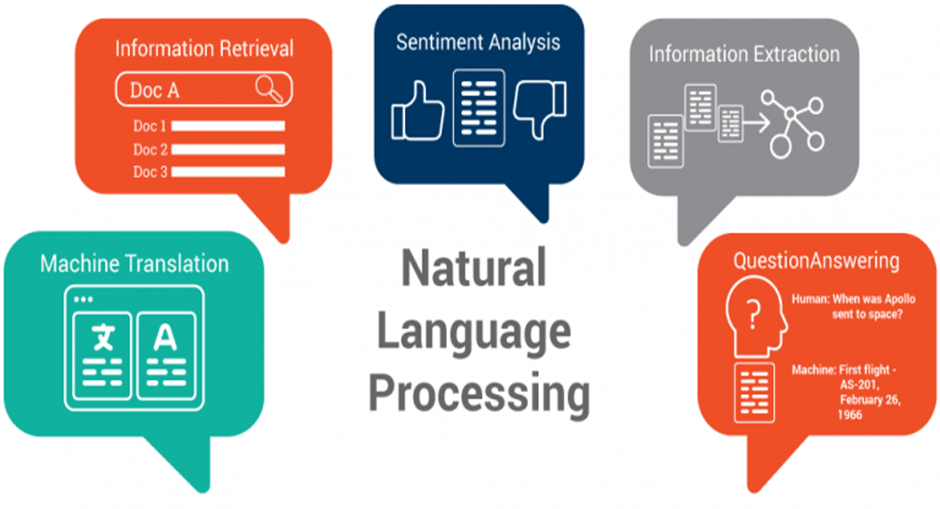
Natural language processing (NLP) is a branch of artificial
intelligence that provides a framework for computers to
understand and interpret human language. Many different
communication channels, including emails, text messages, social
media newsfeeds, video, audio, and more, provide organizations
with massive volumes of speech and text data nowadays. Their
automatic data processing, sentiment analysis of messages, and
real-time human communication responses are all accomplished
through the use of natural language processing (NLP) software.
Natural language processing meets a crucial need in data
analysis because human language is incredibly complex, with many
spoken languages, dialects, syntaxes, grammatical rules,
regional terms, slang, semantics, and abbreviations. NLP has
been woven into daily life for consumers, professionals and
businesses.
Google Translate is an example of widely available NLP
technology at work. These are crucial for breaking down barriers
to communication and facilitating idea sharing among the general
public. Natural language generation and speech recognition are
used by virtual agents like Apple’s Siri and Amazon’s Alexa to
identify patterns in voice requests and provide relevant actions
or insightful remarks in response. When a user types text,
Chatbots respond with the same magic. The technique for smoothly
converting photos into text is called Optical Character
Recognition. Additionally, it contributes through information
extraction, translation, and summary while normalizing the
content.
Understanding, extracting, and analyzing attitudes, feelings,
opinions, and emotions from the provided data is the focus of
Sentiment Analysis. Through domain adaption, sentiment
classification, pre-trained embedding using BERT or GPT, and
feature extraction, natural language processing (NLP) makes a
valuable contribution to sentiment analysis. In recent times,
XLNet has emerged as the superior sentiment analysis tool.
Empowered by the same methodology, it surpasses BERT NLP in
several tasks, including sentiment analysis, and gets around its
constraints.
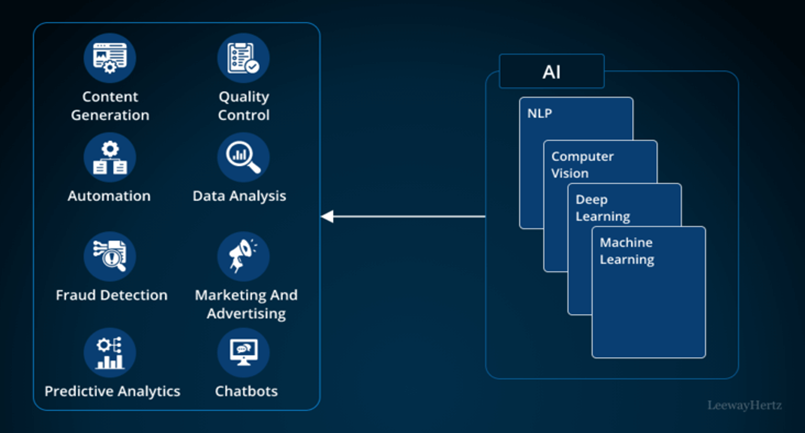
Businesses employ tools and software for natural language
processing (NLP) to automate, simplify, and streamline processes
so they work accurately and efficiently. To name a few
instances: redacting sensitive info, Engagement of customers,
Commercial data analysis.
NLP is a fascinating and challenging field that aims to bridge
the gap between humans and machine language.
Kwantics builds a Virtual Shopping Assistant
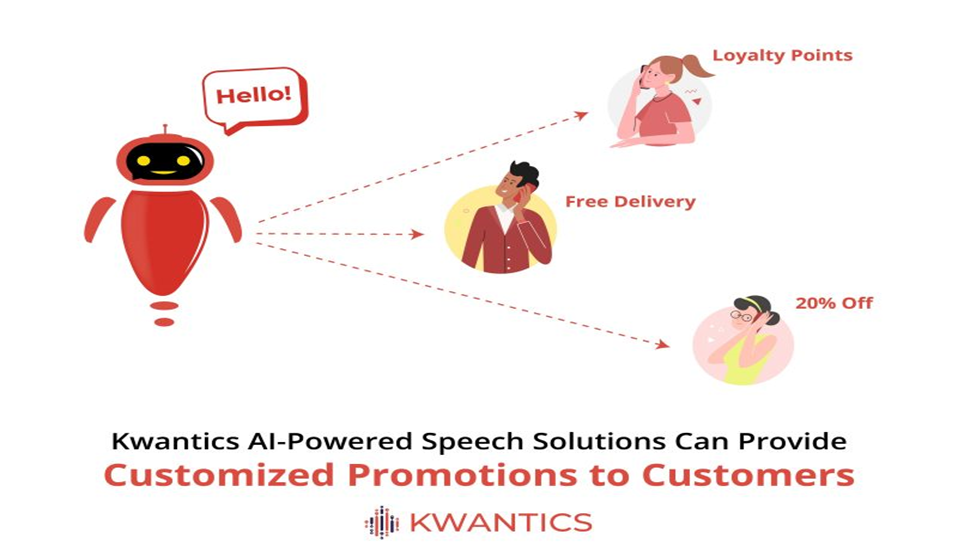
Indian startup Kwantics develops an AI-powered multilingual
virtual shopping assistant. The intelligent voice bot uses NLP
to understand customers’ speech and enable real-time natural
conversations with customers. It also analyzes these
conversations to provide insights on lost opportunities. This
way, the virtual assistant reduces costs by providing both
pre-sales and after-sales support.
Zendesk- Champions of customer service
Zendesk provides a complete customer service solution that is
easy to use and grows with your business Customer service is
about more than the customer. It is about your business and your
teams, too. Zendesk not only makes things easy on your
customers, but sets your teams up for success and keeps your
business in sync. It is everything you need, in one powerful
package. Zendesk is built on an open and flexible platform that
is quick to set up and fully customisable. With Zendesk,
companies of all sizes across industries make it easy for
customers to do business with them.
Grammarly- To improve lives by improving communication
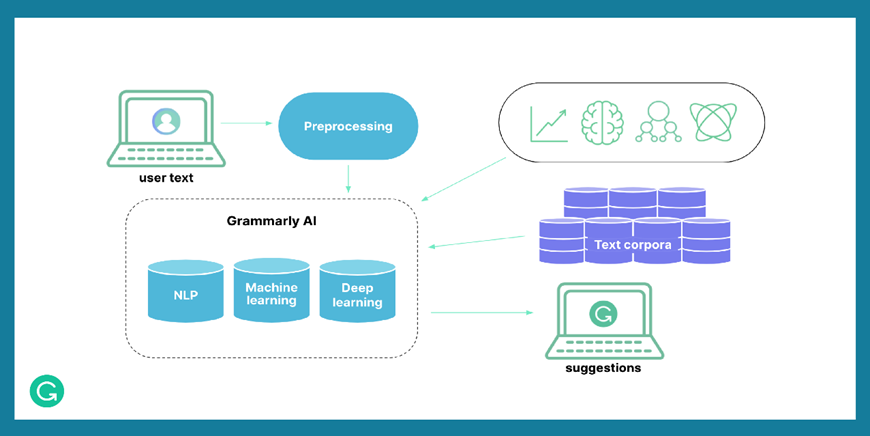
Grammarly is the AI writing partner that helps people at every
stage of the writing process, from blank page to final draft. It
can spark new ideas when you’re getting started or help you
refine your tone to deliver the results you need. Grammarly’s
unrivaled writing assistance is built using a variety of methods
like machine learning and deep learning—and consistently breaks
new ground in natural language processing (NLP) and generative
AI.
Grammarly is intentionally designed to augment human skills so
our customers can achieve quality and quantity—without losing
sight of what’s really important: individual voice and mutual
understanding.
AI DEMOCRATIZATION
The process of making AI tools, capabilities, and technologies
available and usable to a wider and more varied range of
individuals is known as AI democratization. It seeks to reduce
the entrance barriers to AI adoption, allowing businesses and
individuals with less technical know-how to use AI for their
particular need. No-Code AI is a technology that makes it
possible for users with varying degrees of technical proficiency
to take use of artificial intelligence. In summary, companies
can test their ideas without needing to hire programmers or
artificial intelligence experts by utilizing a no-code solution.
The industry as a whole is now in the initial stages of AI
democratization, which is heavily focused on data and AI
literacy initiatives. To achieve responsible and successful
democratization, organizations should prioritize
contextualization, change management, and governance in their
democratization efforts. Companies who take this approach will
not only help address the ongoing shortage of AI expertise, but
they will also guarantee quicker time to market, enable business
users, and boost worker productivity. Therefore, democratization
is a crucial first step toward guaranteeing the responsible,
inclusive, and long-term use of AI.
Large language models (LLMs) such as ChatGPT, GPT-4 for text and
code, and DALL-E 2 for creating novel visual art, are “truly
bringing AI to the masses, with a recent explosion in usage of
these tools for all sorts of use cases. The advantages of
Convolutional Neural Networks (CNN), Recurrent Neural Networks
(RNN), Bidirectional Encoder Representations from Transformers
(BERT), Long Short-Term Memory (LSTM), and even machine learning
methods like decision trees are made more accessible.
Newer technologies such as AutoML are making it possible for
people without this specialized skill set to construct models.
Competitors can release goods more quickly thanks to this tool’s
ability to speed up and scale the training process, even though
expert human input is still necessary—especially for complex
edge instances. According to Gartner, by 2026, over 80% of
businesses should be using GenAI models and APIs in production
environments, a considerable leap from less than 5% in 2023.
This growth represents a change in business methods toward ones
that are more inventive, efficient, and inclusive.
Democratized Generative AI is a paradigm shift in the way we use
and interact with technology, not merely a fad in technology.
There is a limitless opportunity for innovation, efficiency, and
creativity as technology continues to pervade all facets of our
life. In this age of democratization of AI, the secret will be
to ethically and inclusively tap into its potential to make sure
AI stays a tool for the advancement of society as a whole.
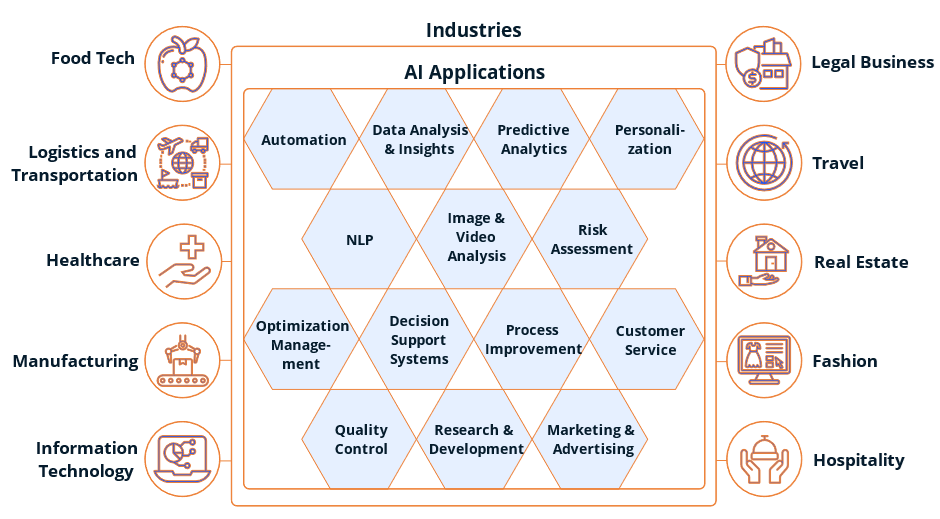
Coursera uses AI for personalized learning experiences. By
adapting content to individual students based on their learning
patterns and preferences, the company improves student
engagement and outcomes.
FedEx knows how to implement AI in business: the shipping
company leverages AI for smart package sorting and tracking.
With AI, they automate the sorting process in distribution
centers, ensuring efficient handling of packages.
Siemens stands as one of the most impressive real-life examples
of artificial intelligence utilization for predictive
maintenance. By crafting a data-based response management
strategy, the company reduces unplanned downtime and lowers
maintenance costs.
Tesla utilizes AI in its electric vehicles for autonomous
driving capabilities. AI systems analyze data from sensors and
cameras to enable features like Autopilot and Full Self-Driving.