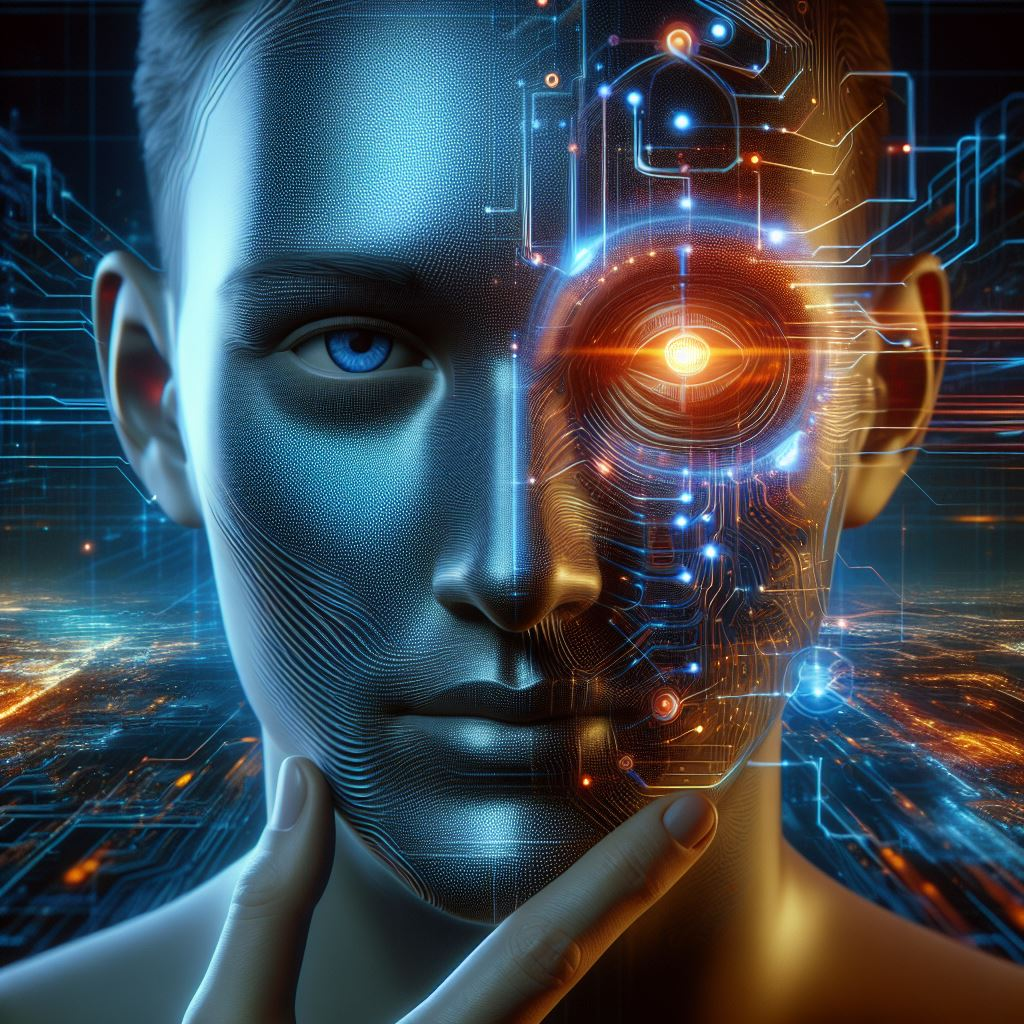
What are Deepfakes?
In recent times you may have read some news related to
Deepfakes. Firstly, I would like to share what are deepfakes. To
Define, a deepfake is a type of artificially generated
media that convincingly replaces one person’s face or voice with
another’s. Or in general terms, Deepfakes are videos, images, or
audio recordings that have been manipulated using advanced
artificial intelligence technology to make it look like someone
is saying or doing something they didn't actually say or do.
Deepfakes are very much like digital impersonation, where the
voices and faces of people are swapped or altered to create
convincing but fake content.
Imagine a video of your friend skydiving, when they actually
hate heights and never done it in reality! That's kind of like a
deepfake. They take real footage and replace someone's face or
voice with other persons to make it look real, even though it's
completely fake.
Some of the recent news that you might have heard around it
recently: The harms that can be caused to society, especially
using deepfakes and misinformation, must be controlled. I think
we need a new law on this. We are widely consulting with the
industry and stakeholders.” Union Minister of India, Ashwini
Vaishnav, March 2024 In May 2023, US stocks dipped briefly after
an image spread online appearing to show the Pentagon on fire.
The images were AI Generated. Recently Donald Trump supporters
have been creating and sharing AI-generated fake images of black
voters to encourage African Americans to vote Republican. Last
year a video appeared of the Ukrainian president calling on his
soldiers to lay down their weapons and return to their families.
Why is it a risk?
1. Reputational Damage: Personal and Professional Impact:
Deepfakes pose a significant risk to an individual’s reputation.
A maliciously created deepfake video could depict someone
engaging in compromising situations, leading to embarrassment,
humiliation, and even legal consequences. Challenges in
Recovery: Once a deepfake circulates, it can be challenging to
undo the damage. Even if proven false, the stain on a person’s
reputation may persist.
2. Erosion of Trust: Doubt in Authenticity: The proliferation of
deepfakes undermines trust in legitimate sources of information.
When people are bombarded with manipulated videos and fabricated
news stories, distinguishing between what’s real and what’s fake
becomes increasingly difficult. This erosion of trust can result
in cynicism, apathy, and a decline in public discourse.
3. Manipulation of Public Opinion: Weaponizing Misinformation:
Malicious actors leverage deepfakes to spread misinformation and
propaganda. By creating fake videos or social media posts, they
can damage a politician’s reputation, advance specific agendas,
or sow discord among the public. Impact on Democracy: The
widespread use of deepfakes threatens the integrity of
democratic processes by influencing public opinion through
deceptive means.
4. Financial Fraud: Stock Market Manipulation: Deepfakes could
be exploited for financial scams. For instance, a fabricated
video of a CEO announcing a false merger or acquisition might
cause stock prices to fluctuate, enabling criminals to profit
from the resulting chaos. Market Volatility: The uncertainty
introduced by deepfakes can destabilize financial markets and
create opportunities for illicit gains.
5. Cybersecurity Threats: Social Engineering Attacks: Hackers
can weaponize deepfakes for social engineering. By creating a
convincing video of a company executive, they may deceive
employees into revealing sensitive information or granting
unauthorized access to secure systems. Heightened Vulnerability:
Organizations must be vigilant against deepfake-based attacks to
safeguard their data and operations.
What can we do to mitigate it?
1.Be Cautious with Personal Information: Limit Personal Presence
on Public Online Platforms: Try keeping private mode on online
platforms. Limit sharing personal images or videos online,
especially on public platforms. Set privacy settings to the
highest level. Strengthen Digital Security: Enable multi-factor
authentication for all accounts to prevent unauthorized access.
Use strong, unique passwords and consider using biometric
passkeys.
2.Develop a Critical Eye: Slow Down and Question Everything:
Don’t react impulsively to shocking or sensational content. Take
a moment to analyze what you’re seeing or reading. Check the
Source: Look for the source of the information. Is it from a
reputable news organization or a random social media account?
Look for Inconsistencies: Deepfakes can have subtle glitches,
like unnatural blinking, jerky movements, or inconsistencies in
lighting or lip syncing. Pay attention to these details.
3.Use Verification Tools: Reverse Image Search: Conduct a
reverse image search using services like Google Lens or TinEye
to see if the image or video appears elsewhere online.
Fact-Checking Websites: Utilize fact-checking websites like
Snopes or PolitiFact to verify claims made in the content.
4.Be Wary of Emotional Manipulation: Deepfakes often trigger
strong emotions like fear, anger, or amusement. Be skeptical of
content that aims to evoke a strong emotional response. Consider
the Context: Does the content fit with current events or
established information about the person or topic?
5.Diversify Your News Sources: Don’t rely on a single source for
your news. Get information from a variety of reputable news
outlets with different perspectives. Be mindful of social media
algorithms. They can create echo chambers, feeding you
information that confirms your existing beliefs.
6.Stay Informed: Deepfake technology is constantly evolving.
Stay informed about the latest trends and techniques used to
create deepfakes. There are resources available online and from
libraries that offer workshops and tutorials on how to spot
deepfakes.